Knee Restoration in Winter Park: Regenerative Medicine for Lasting Relief
The Winter Park business owner who built his success through determination and persistence now applies that same resolve to addressing the knee pain that threatens to sideline his weekend golf game and limit the active lifestyle he's maintained throughout his career. Rather than accepting that knee problems are an inevitable part of aging or rushing into invasive surgery, he's exploring regenerative medicine approaches that offer hope for true knee restoration.
At Revival Longevity & Wellness in Winter Park, we've witnessed remarkable transformations in knee function and comfort through advanced regenerative medicine protocols that target the underlying causes of knee pain and deterioration rather than simply managing symptoms.
Knee restoration through regenerative medicine represents a paradigm shift from traditional approaches that focus on pain management or mechanical replacement to treatments that actually repair and regenerate damaged knee structures. This approach offers Winter Park professionals the opportunity to maintain their natural knee function while addressing the root causes of pain and mobility limitations.
Clinical research published in PMC demonstrates that regenerative approaches for knee conditions, particularly osteoarthritis, show significant promise for pain reduction and functional improvement, with studies indicating that these treatments can provide sustained benefits for many patients: https://pmc.ncbi.nlm.nih.gov/articles/PMC10298392/
Understanding how regenerative knee restoration works, which conditions benefit most from these approaches, and what outcomes you can realistically expect provides the foundation for making informed decisions about your knee health and long-term mobility.
Understanding Knee Degeneration and Regenerative Solutions
The knee joint represents one of the most complex and stress-bearing structures in the human body, subject to enormous forces during activities ranging from simple walking to high-impact sports and recreational activities. Over time, these forces—combined with aging, previous injuries, and genetic factors—can lead to cartilage breakdown, inflammation, and progressive functional decline.
Knee osteoarthritis affects millions of adults and represents the most common cause of knee pain and disability. Traditional understanding viewed this as a "wear and tear" condition that inevitably progressed to require joint replacement. However, current research reveals that osteoarthritis involves complex biological processes that may be modifiable through regenerative interventions.
The knee joint contains multiple structures that can benefit from regenerative treatments. Articular cartilage covers the bone surfaces and provides smooth, pain-free movement. Meniscal cartilage acts as shock absorbers and load distributors. Synovial fluid lubricates the joint and provides nutrition to cartilage. Ligaments and tendons provide stability and movement control.
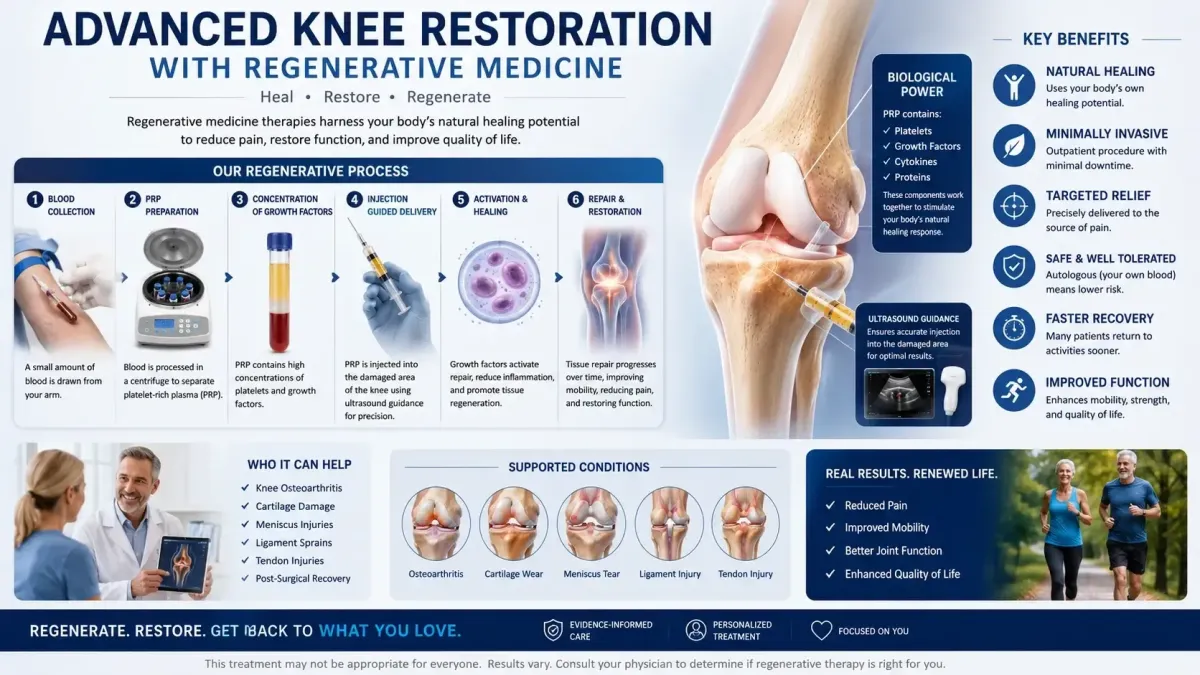
Regenerative knee restoration works by addressing multiple aspects of knee health simultaneously. Stem cell therapy can potentially regenerate damaged cartilage while reducing inflammation and promoting a healthier joint environment. PRP therapy delivers concentrated growth factors that stimulate natural healing processes and tissue repair.
The advantage of regenerative approaches lies in their ability to address underlying tissue damage rather than simply masking symptoms or mechanically replacing joint structures. This biological approach aims to restore your knee's natural function and healing capacity.
For Winter Park professionals, regenerative knee restoration offers several compelling advantages over traditional treatments. The procedures are typically performed on an outpatient basis with minimal recovery time compared to surgery. Natural tissue preservation maintains knee sensation and proprioception that artificial joints cannot replicate.
Early intervention with regenerative treatments may prevent or delay the need for more invasive procedures while maintaining the active lifestyle that many professionals consider essential for stress management and overall wellbeing.
Stem Cell Therapy for Knee Restoration
Stem cell therapy represents the most advanced regenerative approach currently available for knee restoration, offering the potential to actually regenerate damaged cartilage and other joint structures while creating optimal healing environments within the knee joint.
Mesenchymal stem cells used for knee therapy are typically harvested from your own adipose (fat) tissue or bone marrow, ensuring perfect compatibility while providing remarkable regenerative potential. These cells can differentiate into chondrocytes (cartilage cells), helping to rebuild damaged joint surfaces.
The mechanism of action involves both direct tissue replacement and powerful paracrine effects. Stem cells can directly contribute to cartilage repair by differentiating into the appropriate cell types. More importantly, they secrete growth factors, anti-inflammatory compounds, and other bioactive molecules that create regenerative microenvironments.
Research published in PMC reveals that mesenchymal stem cells demonstrate the ability to create repair microenvironments that could explain pain reduction and disease progression termination, with transplanted cells expressing genes that enhance collagen synthesis and produce anti-inflammatory cytokines: https://pmc.ncbi.nlm.nih.gov/articles/PMC8445610/
Clinical applications for stem cell knee therapy include moderate to severe osteoarthritis with cartilage loss, meniscal tears that haven't healed with conventional treatment, chronic knee pain that hasn't responded to other approaches, osteonecrosis (bone tissue death) affecting the knee, and complex knee injuries involving multiple tissue types.
The stem cell procedure for knee restoration typically involves harvesting stem cells from fat tissue (usually from the abdomen or flanks), processing and concentrating the cells using specialized laboratory equipment, and injecting the concentrated stem cells directly into the knee joint under imaging guidance for precise placement.
Recovery from stem cell knee therapy may involve several days of reduced activity, particularly if fat harvesting was required. Most Winter Park professionals can return to desk work within a few days, with gradual resumption of physical activities as healing progresses.
Treatment outcomes from stem cell knee therapy often develop gradually over 3-6 months as regenerative processes continue. Many patients experience progressive improvements in pain, stiffness, and function during this period, with benefits potentially lasting several years.
Patient selection for stem cell knee therapy considers factors including severity of knee damage, age and overall health status, activity level and functional goals, previous treatment responses, and realistic expectations for improvement.
PRP Therapy for Knee Pain and Function
Platelet-rich plasma therapy offers a highly effective regenerative approach for many knee conditions, particularly those involving soft tissue damage, early-stage arthritis, and healing problems that haven't responded to conventional treatments.
PRP works by concentrating the platelets and growth factors from your own blood and delivering them directly to damaged knee structures. This concentrated healing solution contains growth factors at levels 3-7 times higher than normal blood, creating powerful stimulation for natural repair processes.
The growth factors in PRP include platelet-derived growth factor (PDGF), transforming growth factor-beta (TGF-β), vascular endothelial growth factor (VEGF), and numerous others that promote tissue repair, reduce inflammation, and stimulate healthy tissue formation within the knee joint.
Clinical applications where PRP shows particular effectiveness for knee restoration include early-stage knee osteoarthritis, meniscal injuries and chronic meniscal pain, patellar tendinitis (jumper's knee), chronic knee ligament injuries, and post-surgical healing enhancement.
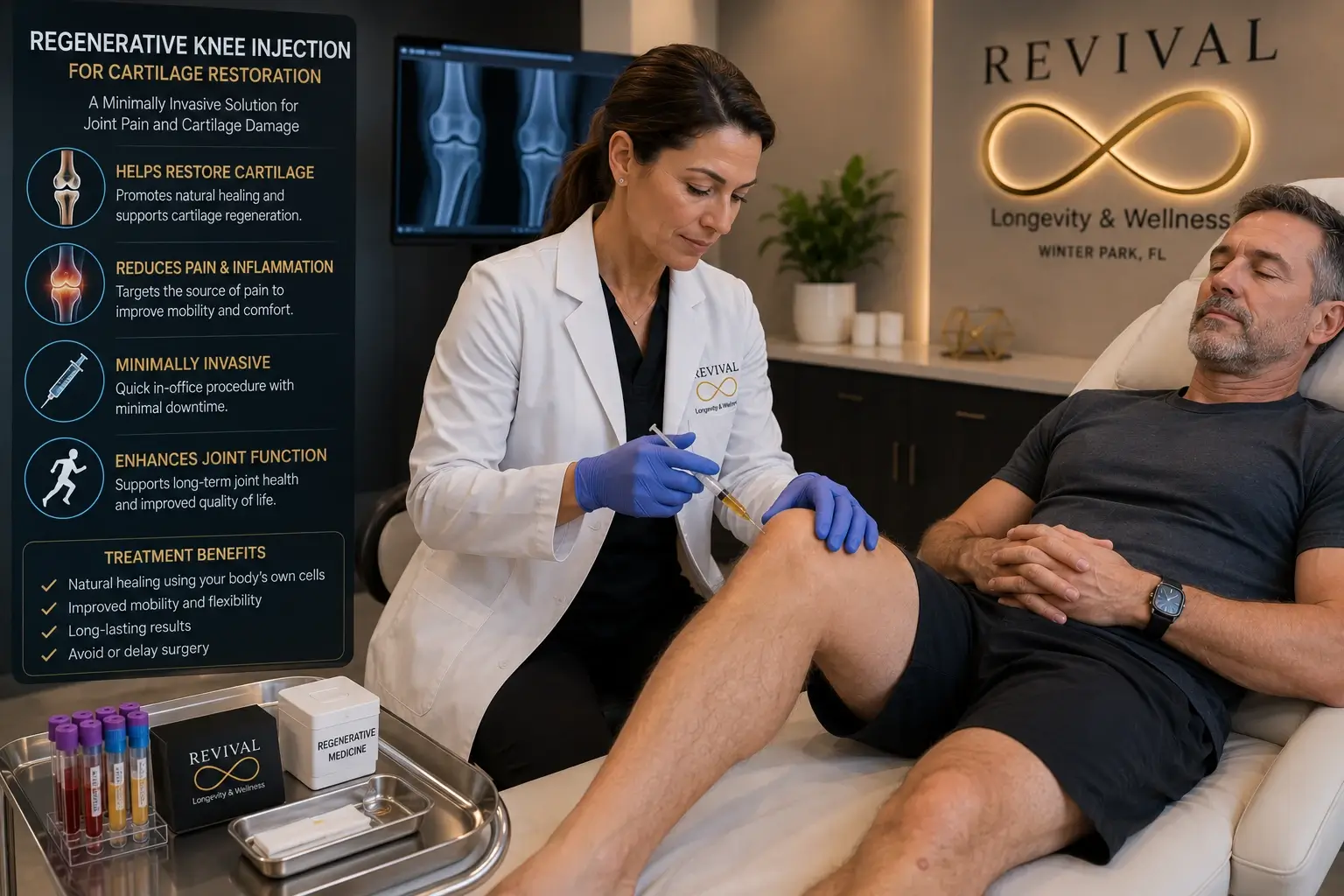
The PRP procedure for knee treatment is relatively straightforward and can be completed during a lunch break. Blood is drawn from your arm, processed in a centrifuge to concentrate platelets, and injected into the knee joint under ultrasound guidance for precise placement.
Recovery from PRP knee therapy typically involves 1-2 days of reduced activity, with most patients returning to normal daily activities quickly. Physical therapy or specific rehabilitation exercises may be recommended to optimize outcomes.
Treatment timelines for PRP knee therapy often involve initial assessment at 4-6 weeks to evaluate response, with many patients experiencing improvement within 2-4 weeks of treatment. Additional PRP treatments may be beneficial for some conditions, typically spaced 4-8 weeks apart.
Comprehensive Knee Restoration Protocols
The most successful knee restoration outcomes result from comprehensive protocols that integrate regenerative treatments with complementary approaches addressing all factors that influence knee health and healing. At Revival Longevity & Wellness, we develop personalized protocols for Winter Park professionals.
Nutritional optimization supports knee healing and reduces systemic inflammation that can interfere with regenerative processes. Anti-inflammatory nutrients like omega-3 fatty acids, curcumin, and specialized cartilage-supporting compounds enhance treatment effectiveness.
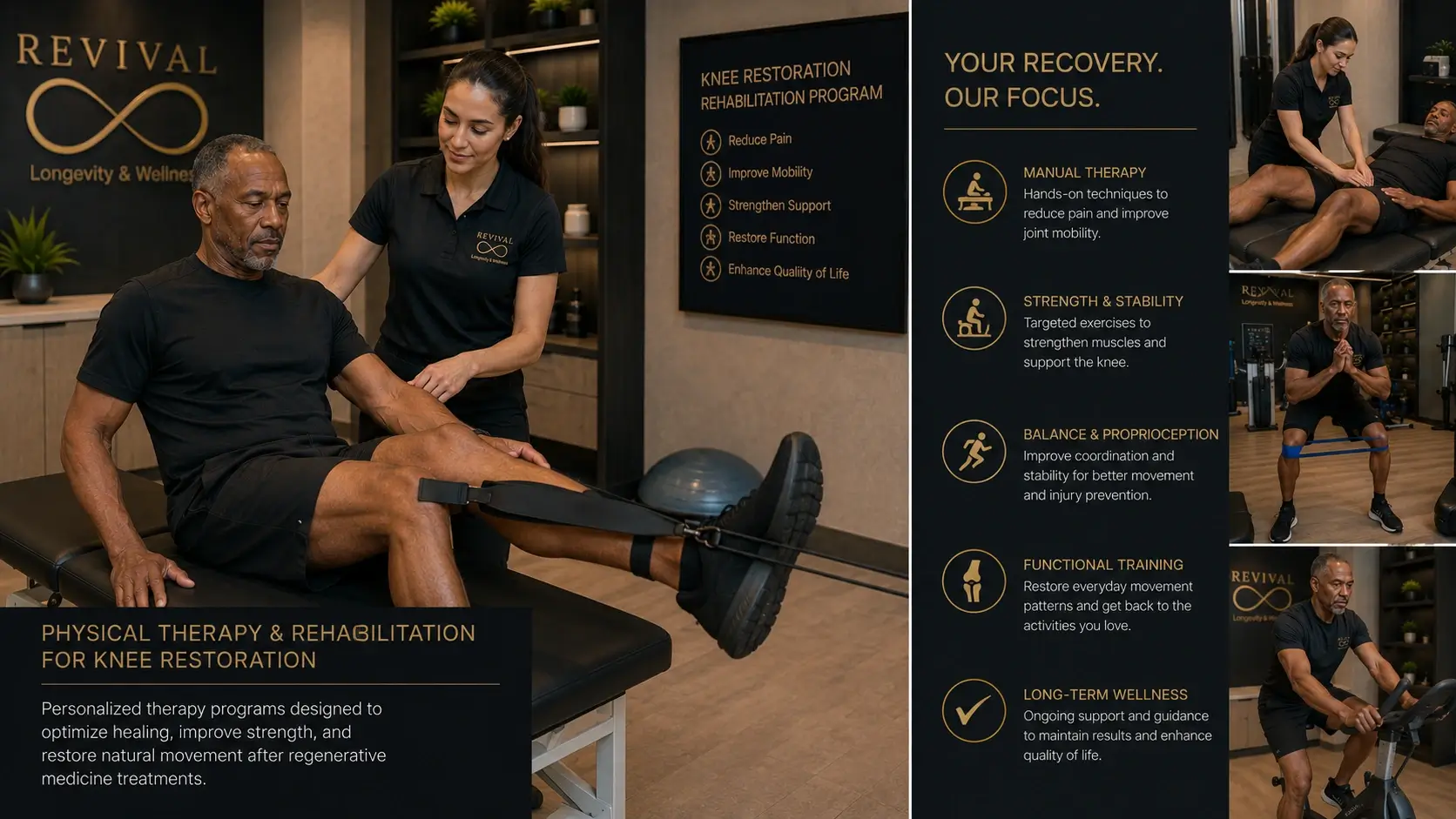
Strategic rehabilitation and exercise protocols maximize regenerative treatment benefits while preventing future knee problems. Properly designed exercise programs can stimulate continued tissue repair, maintain range of motion, and strengthen supporting muscles without overloading healing tissues.
Weight management, when appropriate, reduces mechanical stress on healing knee structures while decreasing systemic inflammation. Even modest weight reduction can significantly improve knee restoration outcomes and long-term joint health.
Advanced monitoring and follow-up ensure that knee restoration progresses optimally and identify any need for additional treatments or protocol adjustments. Regular assessments track improvements in pain, function, and structural healing.
Activity modification and ergonomic optimization help protect regenerating knee structures while allowing return to desired activities. This might include temporary modifications to exercise routines, workplace ergonomics, or recreational activities.
Stress management and sleep optimization support healing processes and reduce inflammatory factors that can interfere with knee restoration. Chronic stress and poor sleep can impair tissue repair and regeneration.
For comprehensive information about our knee restoration services and how they can address your specific needs, explore our joint restoration programs at revivallongevitywellness.com/services/joint-restoration.
Long-term Knee Health and Prevention
Knee restoration represents not just treatment of current problems but also an opportunity to establish long-term knee health strategies that can prevent future issues and maintain optimal function throughout aging. This forward-thinking approach appeals to Winter Park professionals who plan strategically for sustained success.
Preventive maintenance protocols may include periodic PRP treatments to maintain optimal knee health, targeted exercises to preserve strength and mobility, nutritional strategies that support cartilage health, and lifestyle modifications that reduce knee stress and injury risk.
Activity adaptation allows you to continue enjoying recreational and fitness activities while protecting knee health. This might involve technique modifications, equipment changes, or alternative activities that provide similar benefits with less joint stress.
Early intervention strategies address minor knee problems before they progress to require more intensive treatments. Regular monitoring and prompt treatment of developing issues can prevent minor problems from becoming major limitations.
Performance enhancement through optimized knee function often allows return to activities that were previously limited by pain or stiffness. Many Winter Park professionals find that knee restoration enables them to resume sports, fitness routines, and recreational activities they had given up.
The integration of knee restoration with comprehensive health optimization creates synergistic benefits for overall physical capability and longevity. Improved knee function supports better exercise compliance, which benefits cardiovascular health, muscle mass maintenance, and overall vitality.
Your Knee Restoration Journey
Beginning your knee restoration journey represents an investment in maintaining the mobility and active lifestyle that support both professional success and personal satisfaction. At Revival Longevity & Wellness, we provide the expertise and personalized care needed to achieve optimal outcomes.
Comprehensive evaluation begins your journey with thorough assessment of your knee condition, overall health status, activity goals and limitations, previous treatments and responses, and lifestyle factors that influence knee health.
Personalized treatment planning integrates evaluation findings with your specific needs and preferences to develop regenerative protocols that maximize effectiveness while accommodating your professional and personal demands.
Ongoing support throughout your restoration journey includes monitoring progress, adjusting protocols as needed, and providing guidance for optimizing outcomes through complementary approaches.
Long-term partnership in knee health extends beyond initial treatment to include preventive strategies, maintenance protocols, and access to emerging treatments as they become available.
For Winter Park professionals who refuse to accept that knee pain and limitation are inevitable consequences of aging or activity, regenerative knee restoration offers evidence-based hope for maintaining active, comfortable mobility throughout extended careers and beyond.
Ready to explore how regenerative medicine can restore your knee function and support your active lifestyle? Contact Revival Longevity & Wellness to schedule your comprehensive knee evaluation and discover the restoration treatments that can help you return to pain-free mobility.
Frequently Asked Questions
Can knee restoration therapy help me avoid knee replacement surgery?
Regenerative knee restoration may help delay or avoid knee replacement surgery in many cases, particularly for mild to moderate arthritis or specific injury patterns. While not appropriate for all situations, many patients experience significant improvement that eliminates the immediate need for surgery.
What knee conditions can be treated with regenerative therapy?
Regenerative therapy can address various knee conditions including osteoarthritis, meniscus tears, ligament injuries, cartilage damage, patellofemoral pain syndrome, and chronic knee pain from various causes.
How long does knee restoration therapy take?
Individual knee restoration sessions typically take 1-2 hours including preparation and post-treatment monitoring. The complete treatment protocol may involve multiple sessions over several months, depending on your condition and response.
Can I continue working during knee restoration treatment?
Most knee restoration treatments allow you to maintain your work schedule with minimal disruption. Activity modifications may be recommended for optimal healing, but most Winter Park professionals can continue their normal work activities.
How does knee restoration compare to steroid injections?
Knee restoration therapy aims to promote actual healing and tissue regeneration, while steroid injections provide temporary pain relief without addressing underlying tissue damage. Regenerative approaches may provide longer-lasting benefits.
Will I need multiple knee restoration treatments?
Treatment protocols are individualized based on your condition and response. Some patients achieve excellent results with a single treatment, while others benefit from multiple sessions or combination approaches for optimal outcomes.
What should I expect during recovery from knee restoration therapy?
Recovery typically involves minimal downtime with gradual return to full activities. Some temporary soreness or swelling is normal. We provide specific post-treatment guidelines to optimize healing and results.
For detailed consultation and personalized treatment planning, visit revivallongevitywellness.com/consultation.
For comprehensive information about regenerative joint health and how knee restoration fits into complete wellness optimization, read our complete guide at revivallongevitywellness.com/post/stem-cell-therapy-joint-pain-winter-park
